

 Facebook
 X
X
 Pinterest
 Copy Link
If you’re moving to Western North Carolina, one of the terms you may hear while house hunting is “private road.”
For buyers coming from suburban or urban areas, that can raise a lot of questions.
Who maintains the road?
Who pays for repairs?
Can a lender finance a home on a private road?
What happens if the road washes out or needs gravel?
Is there a written road maintenance agreement?
Those are important questions, especially when buying mountain property in Waynesville, Maggie Valley, Haywood County, or elsewhere in Western North Carolina.
A private road does not automatically mean there is a problem. Many homes are located on private or shared roads. The key is understanding exactly what you are buying into before closing.
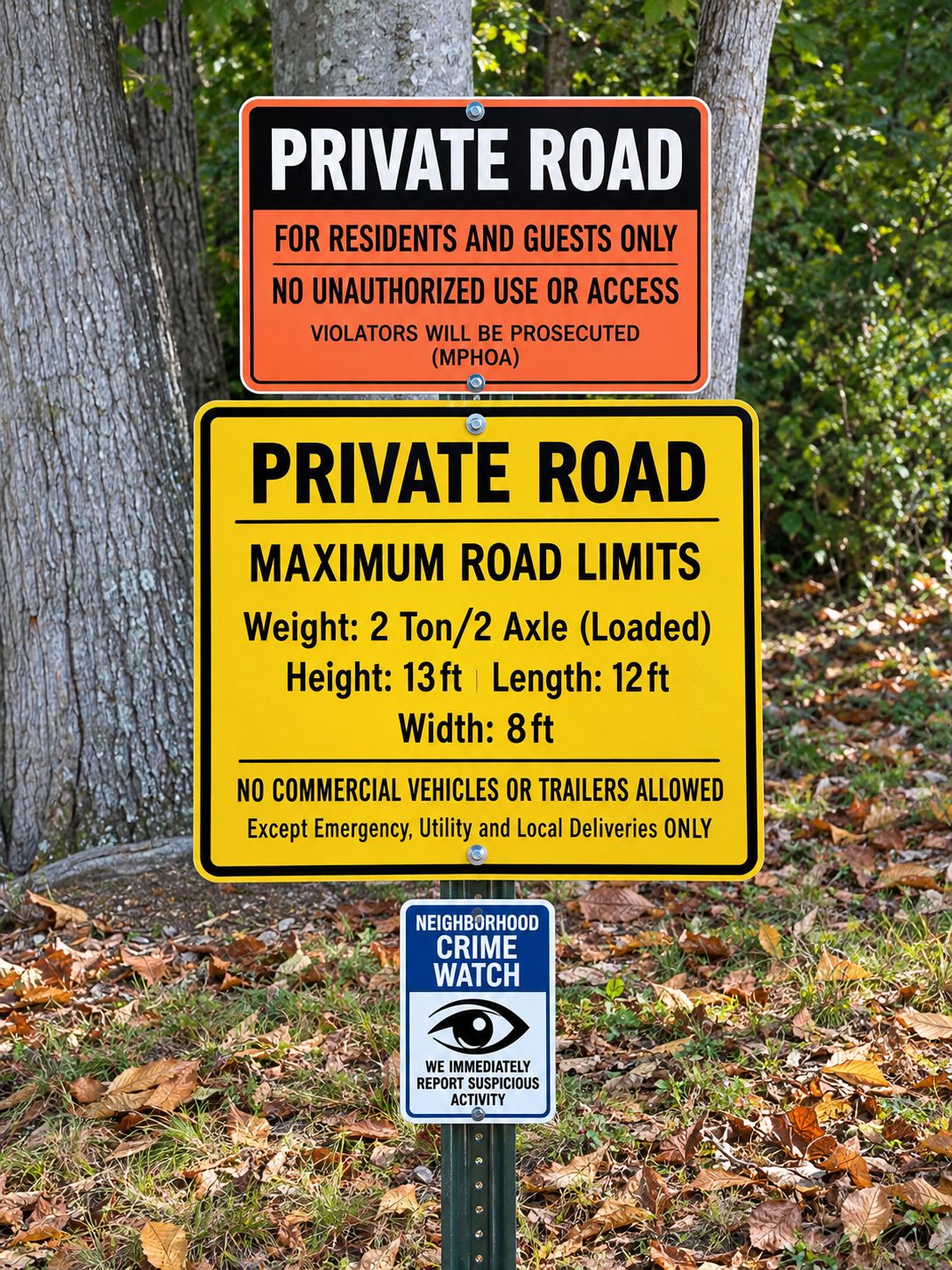
What Is a Private Road in North Carolina?
A private road is generally a road that is not maintained by the state or a municipality.
In North Carolina, NCDOT maintains a large portion of public roads, including many secondary roads. But roads that are not part of the state-maintained system may be private, municipal, federal, or maintained another way. NCDOT provides a Public Street Information Database that buyers and real estate professionals can use as an initial reference to check road ownership or maintenance status.
For mountain property, this matters because a road may look perfectly normal while still being privately maintained.
Do not assume that pavement, a road sign, or regular traffic means NCDOT maintains it.
Why Private Roads Are Important When Buying a Mountain Home
The condition and maintenance of a road can affect much more than your daily drive.
It may influence:
- access to the home
- maintenance costs
- emergency vehicle access
- snow or ice removal
- drainage and washout repairs
- gravel replacement
- shared responsibilities with neighbors
- insurance or lending questions
- resale considerations
For mountain homes, road conditions can also be affected by grade, drainage, erosion, heavy rain, fallen trees, and winter weather.
That is why road status should be part of your due diligence, not an afterthought.
Who Maintains a Private Road?
That depends on the property.
Maintenance might be handled by:
- an HOA
- a property owners association
- a road maintenance association
- neighboring property owners
- the developer
- individual owners under a written agreement
Sometimes responsibilities are clearly documented.
Other times, the arrangement may be informal.
The North Carolina Real Estate Commission has specifically warned buyers about private streets and notes that residents on private roads may be responsible for maintaining and repairing them. It also advises that a written road maintenance agreement can be important when owners share responsibility.
What Is a Road Maintenance Agreement?
A road maintenance agreement is a written document that explains how a private road will be maintained and how costs are shared.
Depending on the property, an agreement may address:
- who is responsible for maintenance
- how costs are divided
- who decides when repairs are needed
- graveling or paving
- drainage repairs
- snow removal
- tree removal
- major repairs
- access rights
- enforcement if an owner does not pay
Not every private road has the same arrangement.
That is why buyers should review the actual recorded documents rather than relying only on a verbal explanation such as:
“Everyone just chips in when something needs to be done.”
That arrangement may have worked for years, but a buyer should understand what is legally documented.
How Can You Find Out Whether a Road Is State Maintained?
A good starting point is the NCDOT Public Street Information Database.
NCDOT says this map is designed to show road ownership and maintenance status throughout North Carolina. It distinguishes state-owned roads from non-state-owned roads, including private and municipal roads. Connect NCDOT
However, NCDOT also cautions that the database is a reference tool and should not be treated as a legal document. Source documents should be consulted when verification is necessary. Connect NCDOT
For a buyer, that means:
Use the map as a starting point, but if road status matters to your purchasing decision, verify it during due diligence.
Questions Buyers Should Ask About a Private Road
If you are considering a home on a private or shared road, ask these questions early.
Who owns the road?
The road may cross several parcels or may be located within a recorded easement.
Understanding ownership helps clarify maintenance responsibility.
Is there a recorded easement?
An easement gives someone the legal right to use another person’s property for access.
For mountain property, confirming legal access to the home is extremely important.
Is there a written road maintenance agreement?
Ask for a copy and read it carefully.
You may also want your closing attorney to review it.
How much does maintenance typically cost?
Ask whether owners have regular dues or whether expenses are collected only when work is needed.
Has the road had major repairs?
Past repairs may give you useful information about drainage, washouts, paving, gravel, retaining walls, or erosion.
Who handles winter weather?
In some mountain areas, owners may be responsible for snow or ice management.
Can emergency vehicles access the property?
A steep or narrow road may deserve additional attention, particularly if access is important to you.
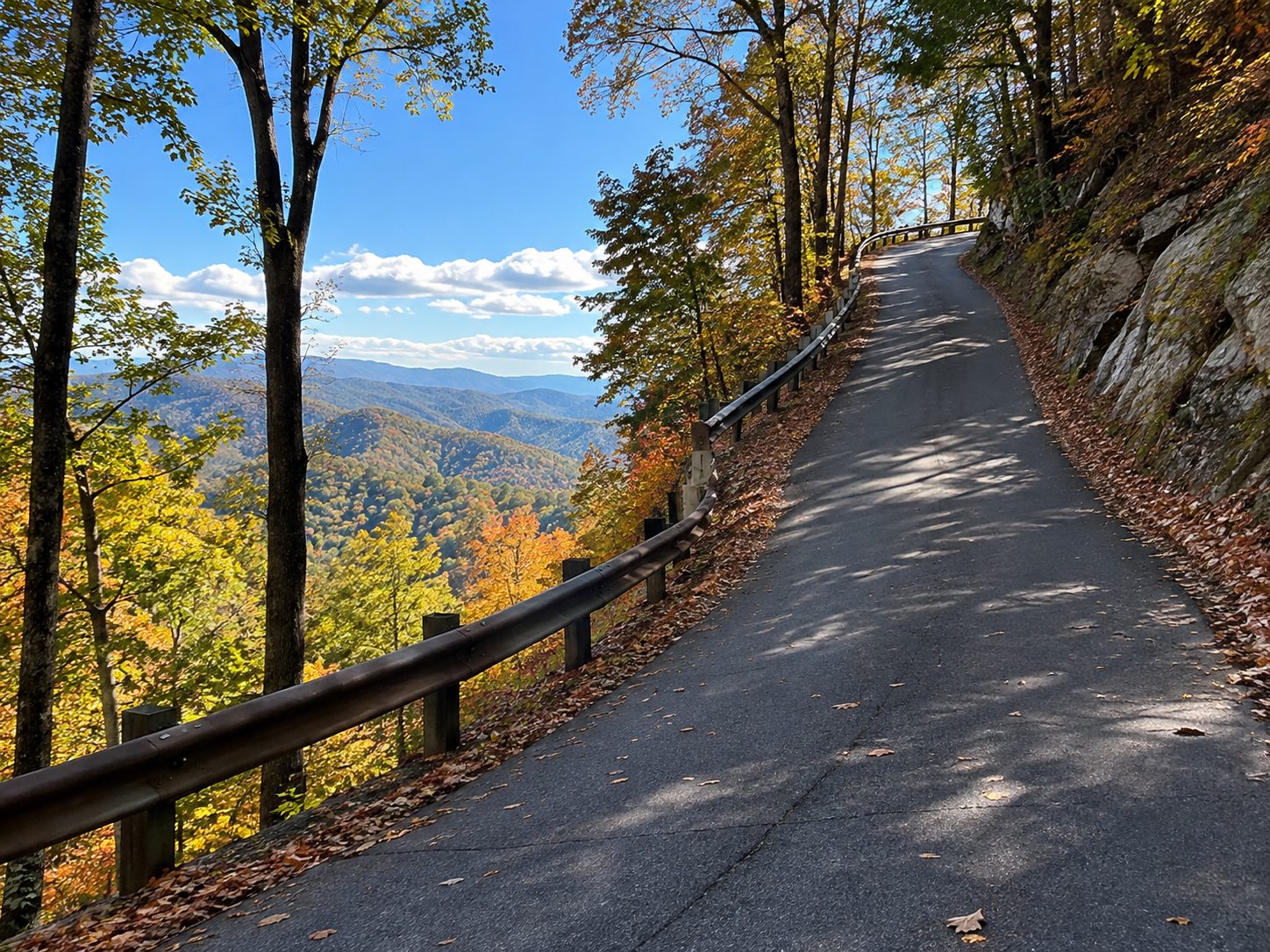
What About Steep Mountain Roads?
A road can be public or private and still be steep.
For buyers relocating to WNC, I recommend evaluating the entire route to the property, not just the driveway.
Consider:
- road width
- curves
- grade
- guardrails
- pavement versus gravel
- drainage
- turnaround areas
- visibility
- drop-offs
- winter exposure
Drive the route yourself if possible.
A mountain home may be beautiful, but you should feel comfortable with the access you will use every day.
Can You Get a Mortgage on a Home With a Private Road?
Often, yes.
But lenders may have requirements related to legal access and road maintenance.
Requirements can vary by loan program and lender, so buyers should discuss the road situation with their lender early in the process.
Do not wait until the week before closing to find out whether additional documentation is needed.
Your lender, closing attorney, and real estate professional can help identify what needs to be reviewed.
What Documents Should Buyers Review?
Depending on the property, useful documents may include:
- recorded deed
- recorded easements
- road maintenance agreement
- HOA or POA documents
- subdivision plats
- restrictive covenants
- survey
- title work
These documents can help answer questions about access, ownership, and responsibility.
Private Road Does Not Mean “Bad Road”
This is an important distinction.
Some private roads are extremely well maintained.
Some public roads may still be narrow, winding, or steep.
The real question is not simply:
“Is this a private road?”
The better questions are:
Who maintains it, how is that responsibility documented, and am I comfortable with the access and costs?
That is the information a buyer needs to make an informed decision.
Buying Mountain Property Means Looking Beyond the House
When buying a home in Waynesville, Maggie Valley, Haywood County, or elsewhere in Western North Carolina, it is easy to focus on the view, the porch, the fireplace, or the cabin feel.
But mountain property requires looking at the whole picture.
The road, driveway, terrain, water systems, drainage, and access can all be part of the buying decision.
A little investigation during due diligence can help you understand exactly what comes with the property.
Frequently Asked Questions
How do I know if a road is private in North Carolina?
The NCDOT Public Street Information Database is a good starting point for checking whether a road is state maintained. NCDOT recommends verifying important information with primary source documents when necessary. Connect NCDOT
Who pays to maintain a private road?
Responsibility varies. It may fall to property owners, an HOA, a road association, or a developer. A written road maintenance agreement may explain how costs are divided.
Do private roads have to meet NCDOT standards?
Not necessarily. The North Carolina Real Estate Commission notes that private streets may or may not have been built to state standards. NCREC Bulletins
Should I buy a house on a private road?
A private road is not automatically a reason to avoid a property. Buyers should understand legal access, maintenance responsibilities, road condition, costs, and any written agreements before purchasing.
Can a lender require a road maintenance agreement?
Some lenders or loan programs may have requirements involving access or road maintenance. Buyers should confirm requirements directly with their lender early in the transaction.
Should my attorney review a private road agreement?
If a property depends on a private road or shared access, having the closing attorney review recorded easements and maintenance documents can help clarify rights and responsibilities.
Call to Action
If you’re considering a mountain home in Waynesville, Maggie Valley, Haywood County, or the surrounding Western North Carolina area, private roads are just one of the details worth understanding before you buy.
Contact me before heading up an unfamiliar private road or driveway. I can help you confirm access, arrange a showing, and identify the questions worth asking before you move forward.
Discover WNC with Dana
From Visitor to Local — Helping You Make the Mountains Home


